

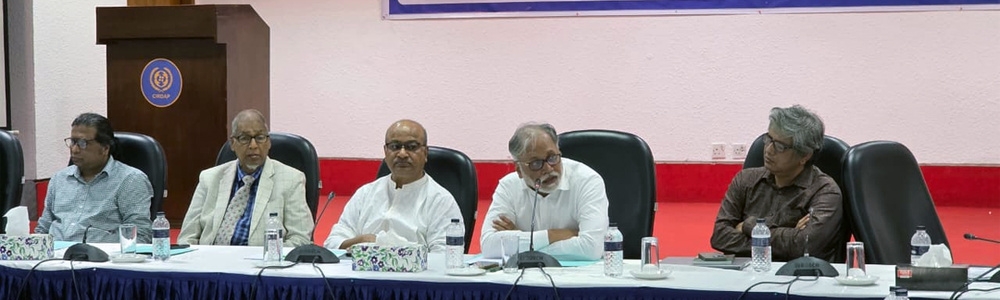
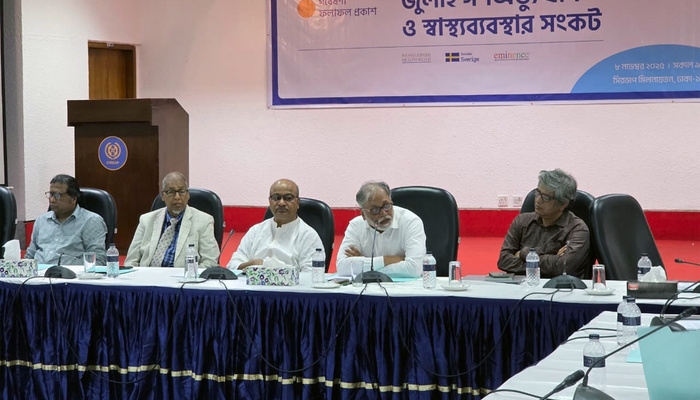
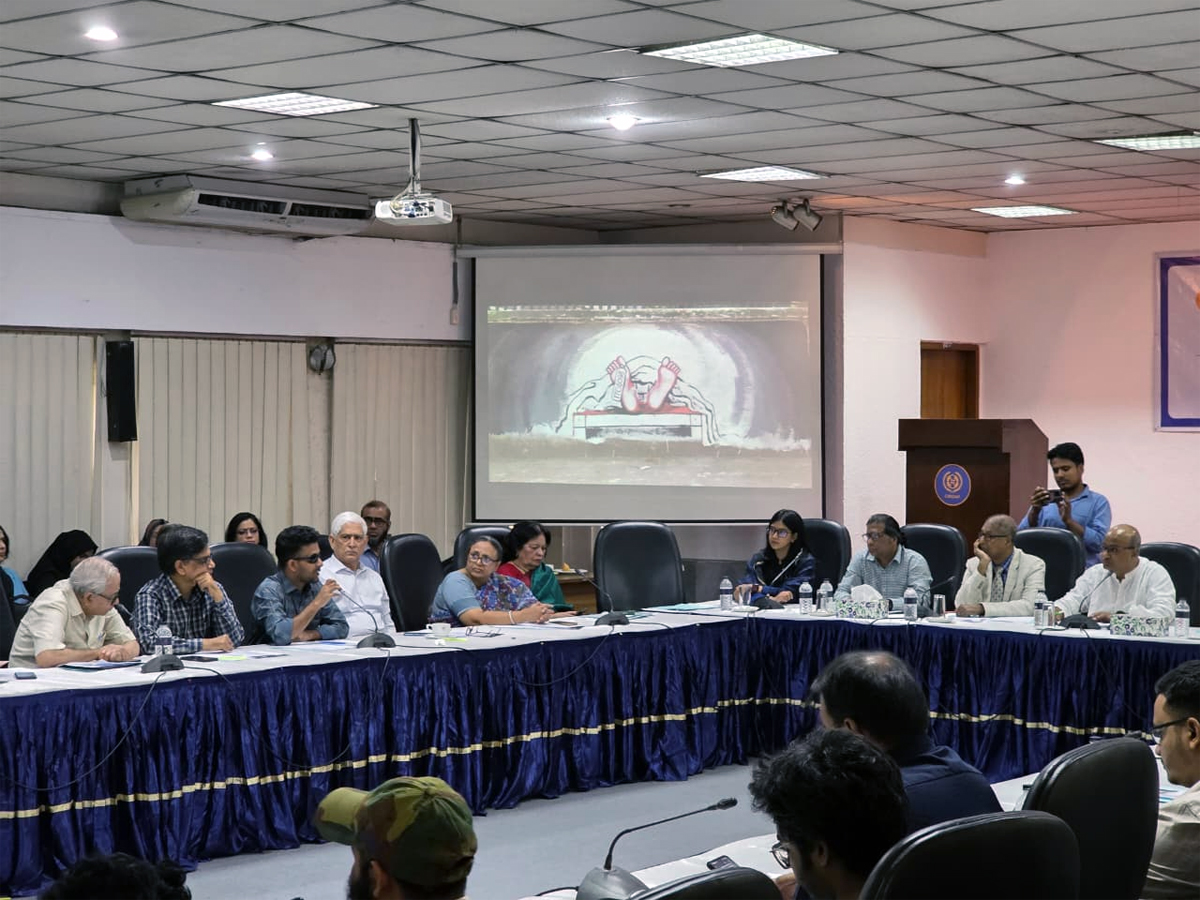
Bangladesh Health Watch and Eminence Bangladesh jointly organized a research dissemination event at the CIRDAP auditorium on November 8, 2025. The study, titled "July Mass Uprising and Crisis of Health System". The study identified three primary and four root causes behind these obstructions and made five recommendations. The event was graced by the chief guest, Dr. Sayeedur Rahman Khasru, publish health researcher, Dr Ahmed Ehshanur Rahman.
The key presentation was done by public health researcher Ahmed Ehsanur Rahman and Eminence Bangladesh CEO Shamim Hayder Talukder.
Ehsanur said that after discussions with injured victims, health service providers, journalists, and hospital administrators, as well as analyses of newspaper reports, the study found barriers in seeking medical treatment, receiving effective treatment, and conducting last rites.
Four major factors obstructed injured victims from seeking timely treatment: fear of persecution by police or the then ruling party (Awami League) members; mobility restrictions such as curfews; breakdown of transportation services; and having no one to accompany them.
Nine barriers were identified in receiving effective hospital treatment: denied or delayed admissions; inadequate or delayed care; mismanaged referrals; overwhelmed facilities; shortages of workforce or resources; documentation errors; ethical breaches in healthcare; financial barriers or informal payments; and premature or coerced discharge.
Obstructions during the last rites of deceased victims included non-identification of several bodies, police interference during inquests, harassment during body handovers, lack of private mortuary services, overcrowded public morgues, delays in autopsies, and difficulties in obtaining death certificates.
Ehsanur Rahman said, "There were three primary reasons behind such obstacles: gaps in emergency preparedness, coordination and leadership, and legal and infrastructural support."
The four root causes, Shamim Hayder said, were the deprioritisation and over-politicisation of the health sector; absence of institutional ethics promotion and culture; and lack of acknowledgement of political conflict as a special health need.
The study made five recommendations: strengthening the enforcement of medical neutrality and ethical accountability; depoliticising the health sector; improving emergency response; modernising outdated medico-legal laws; and ensuring transparency in data.
Prof M Muzaherul Huq, a member of the Health Sector Reform Commission, said emergency medical care has not developed adequately in the country, noting that hospital emergency departments lack essential equipment and workforce, leading to the poor response during the July uprising.
Regarding allegations that some doctors refused to treat the injured during the uprising, he said, "A doctor's primary and ethical duty is to treat patients under all circumstances," adding that ethics and ethical behaviour are not properly taught in the country's medical schools.
Prof Sayedur Rahman, special assistant to the chief adviser for the health ministry, said the crisis exposed by the research lies in political and economic issues. And said, "While the country's health sector faces many problems, the weakness of emergency medical care was particularly exposed during the July uprising.
Citizen's Voice